Returning to Self Portraits Again: Refraction, Frustration, and Finding My Way Back to Creating
There are some photoshoots that start as random ideas.
And then there are the ones that stay in your head for months.
This was one of those shoots for me.
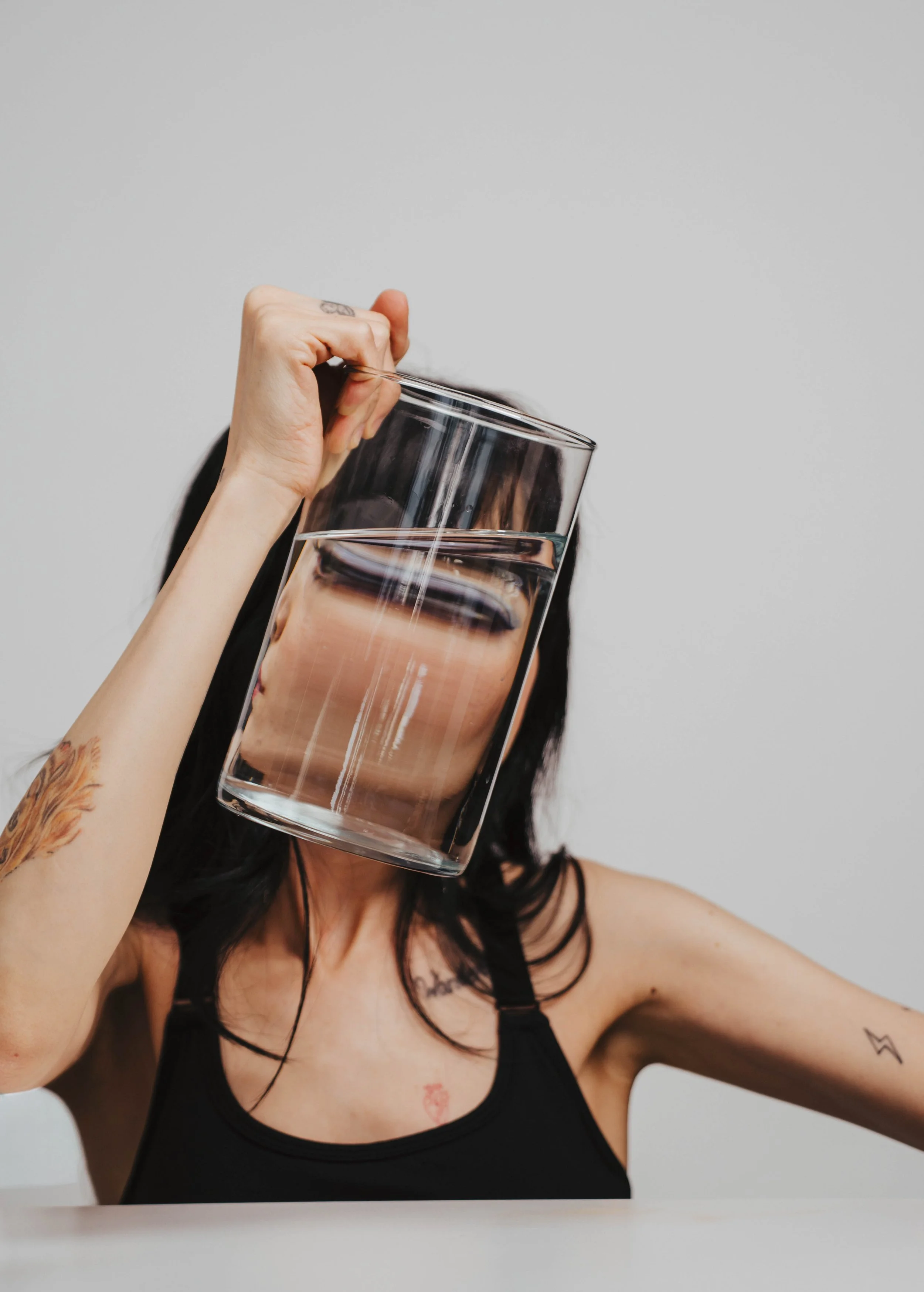
I had been thinking about creating a refraction self portrait series for such a long time. Every time I saw glass distortion photography or reflections through water, I would save it somewhere and tell myself, I need to try this one day.
But “one day” kept turning into later.
Mostly because self portraits became emotionally complicated for me.
There was a period in my life where I used to create self portraits constantly. Not for social media. Not because I loved being in front of the camera. But because creating them genuinely made me feel connected to myself. It was one of the few things that felt completely mine.
Then life changed.
Trauma changed me.
My health changed me.
My relationship with my body changed.
And honestly, creating became harder.
Not creatively — emotionally.
Sometimes people think self portrait photography is just setting up a tripod and taking photos of yourself, but it’s actually exhausting in ways people don’t always realize. You become the photographer, model, lighting assistant, art director, stylist, and problem solver all at once. And when you’re already mentally or physically drained, even setting everything up can feel overwhelming.
That’s partly why I stopped doing them for a while.
But lately, I’ve been realizing something:
I miss creating things just because they bring me joy.
Not because they’re strategic.
Not because they’ll perform well online.
Not because they’ll attract clients.
Just because creating still feels like coming home to myself.
And honestly, this shoot almost didn’t happen either.
My tripod was fighting me the entire time.
I’ve been struggling with my tripod setup recently, sometimes the simplest technical things end up completely interrupting the creative flow. At one point I genuinely got so frustrated that I considered giving up for the night.
But I think that’s also what this shoot became about.
Figuring it out anyway.
Adapting.
Adjusting.
Working around the problem instead of waiting for perfect conditions.
Which honestly feels very symbolic of where I’m at in life right now too.
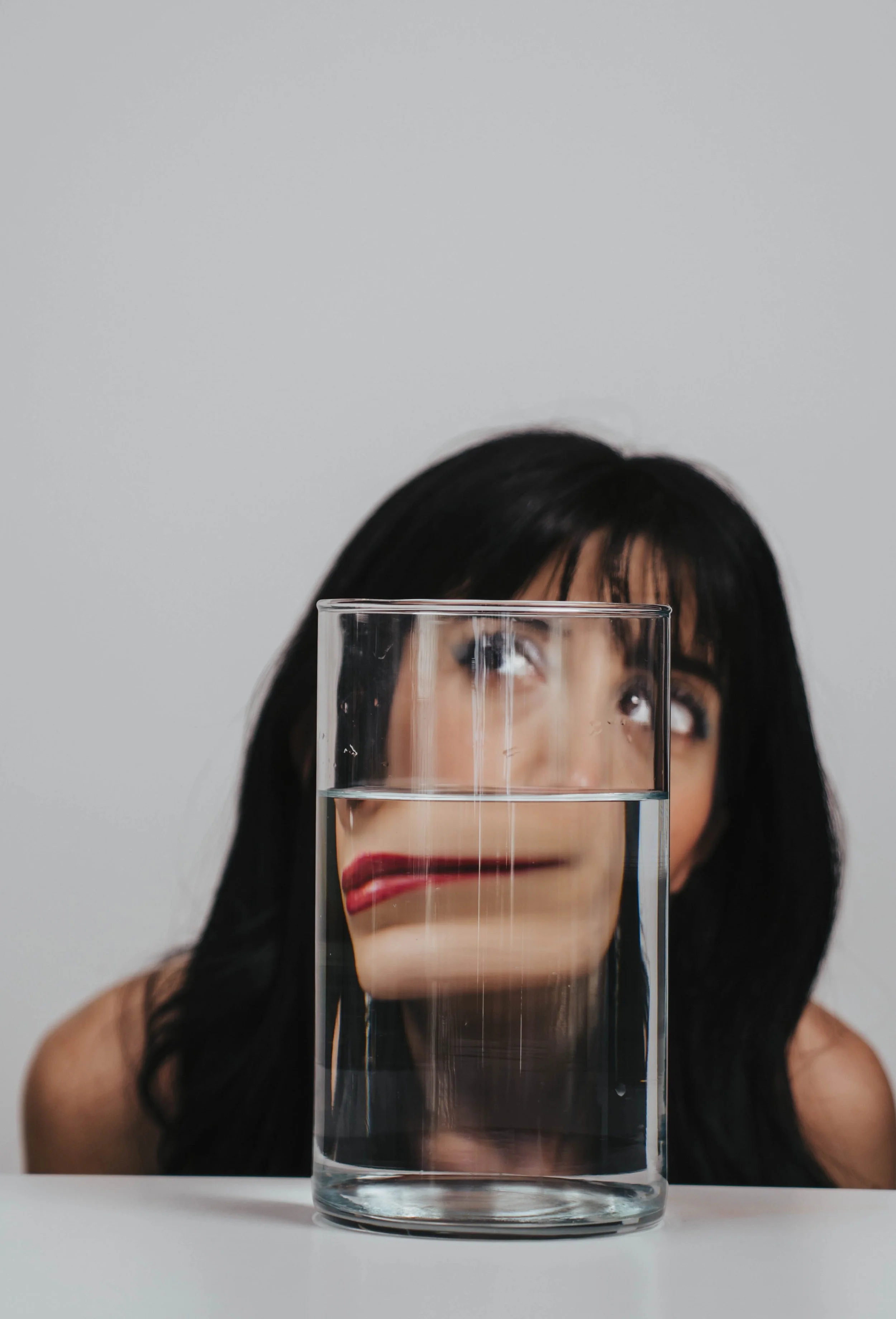
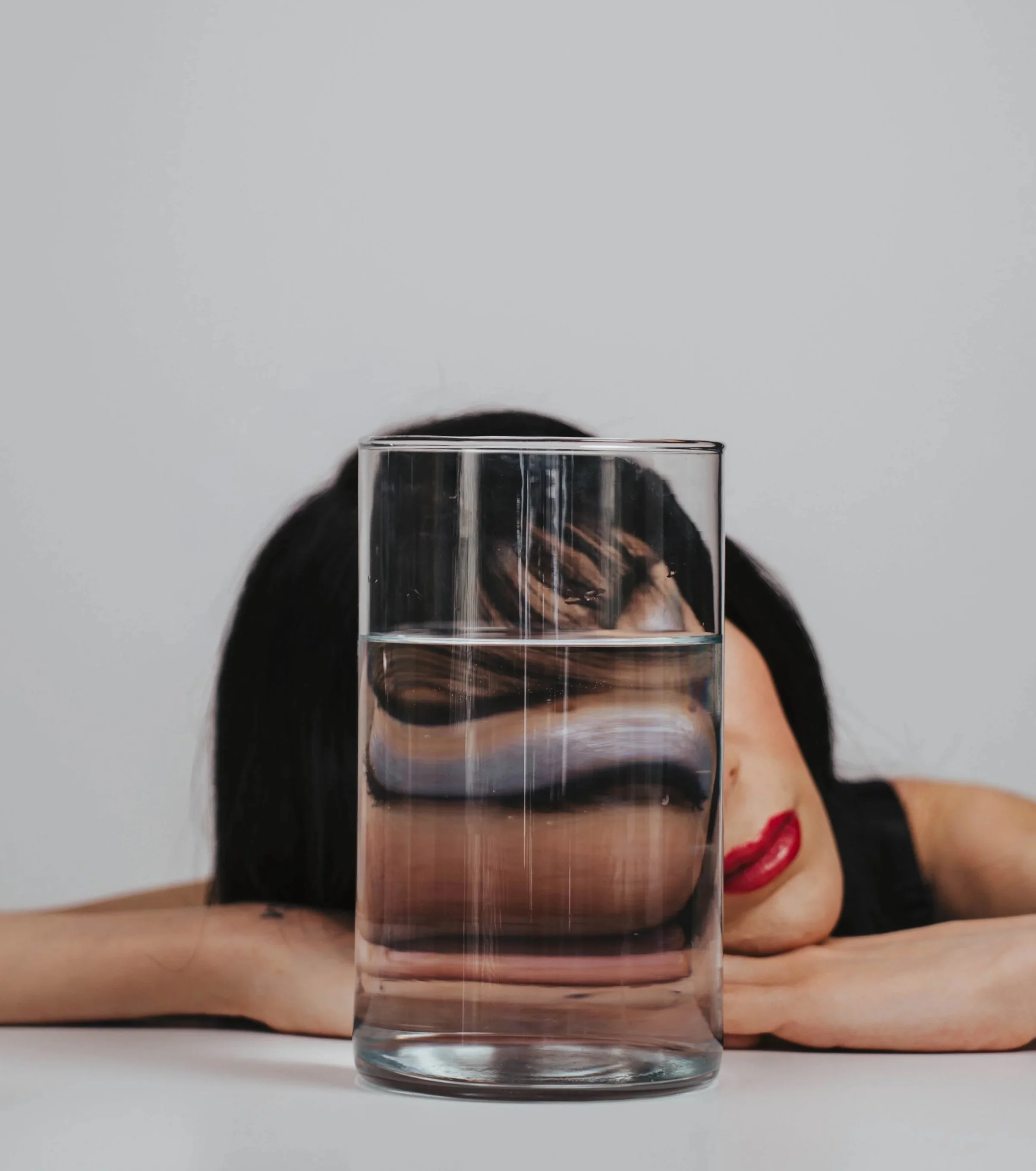
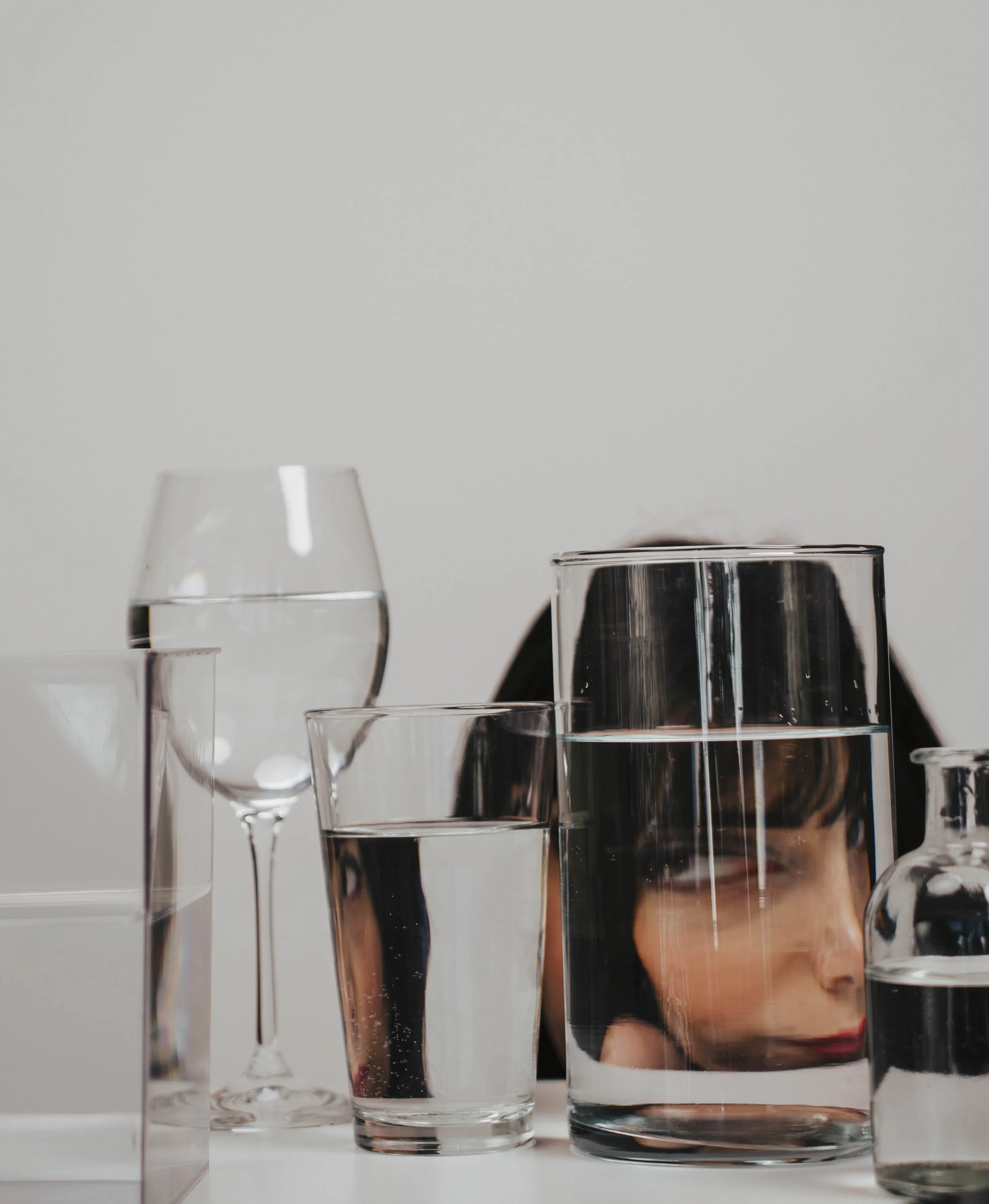
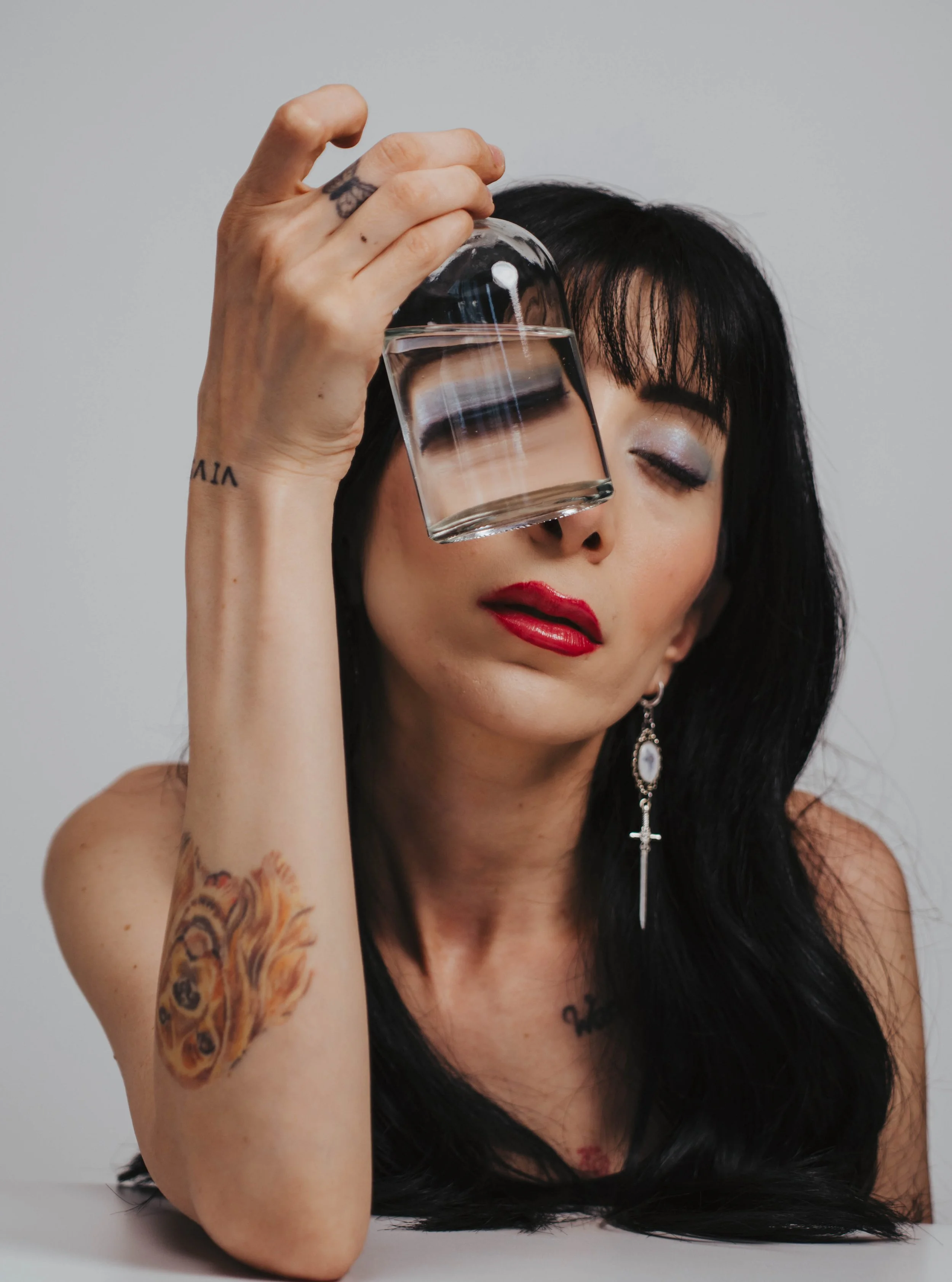
The concept itself was intentionally minimal. Just water, glass, distortion, and light.
I didn’t want elaborate props or heavy styling because the emotion was already inside the distortion itself. The way the face bends through water almost feels unsettling at first — but also strangely beautiful.
I loved how unpredictable it was.
Sometimes the glass stretched the face horizontally. Sometimes it compressed features into almost abstract shapes. Sometimes only one eye stayed visible while the rest disappeared into blur and reflection.
It stopped feeling like regular portrait photography and started feeling more like emotion translated visually.
That’s what I love most about conceptual portraiture.
You’re not just documenting a face.
You’re creating a feeling.
And I think these images became about identity in a way I wasn’t expecting. About trying to reconnect with versions of yourself that existed before survival mode took over everything.
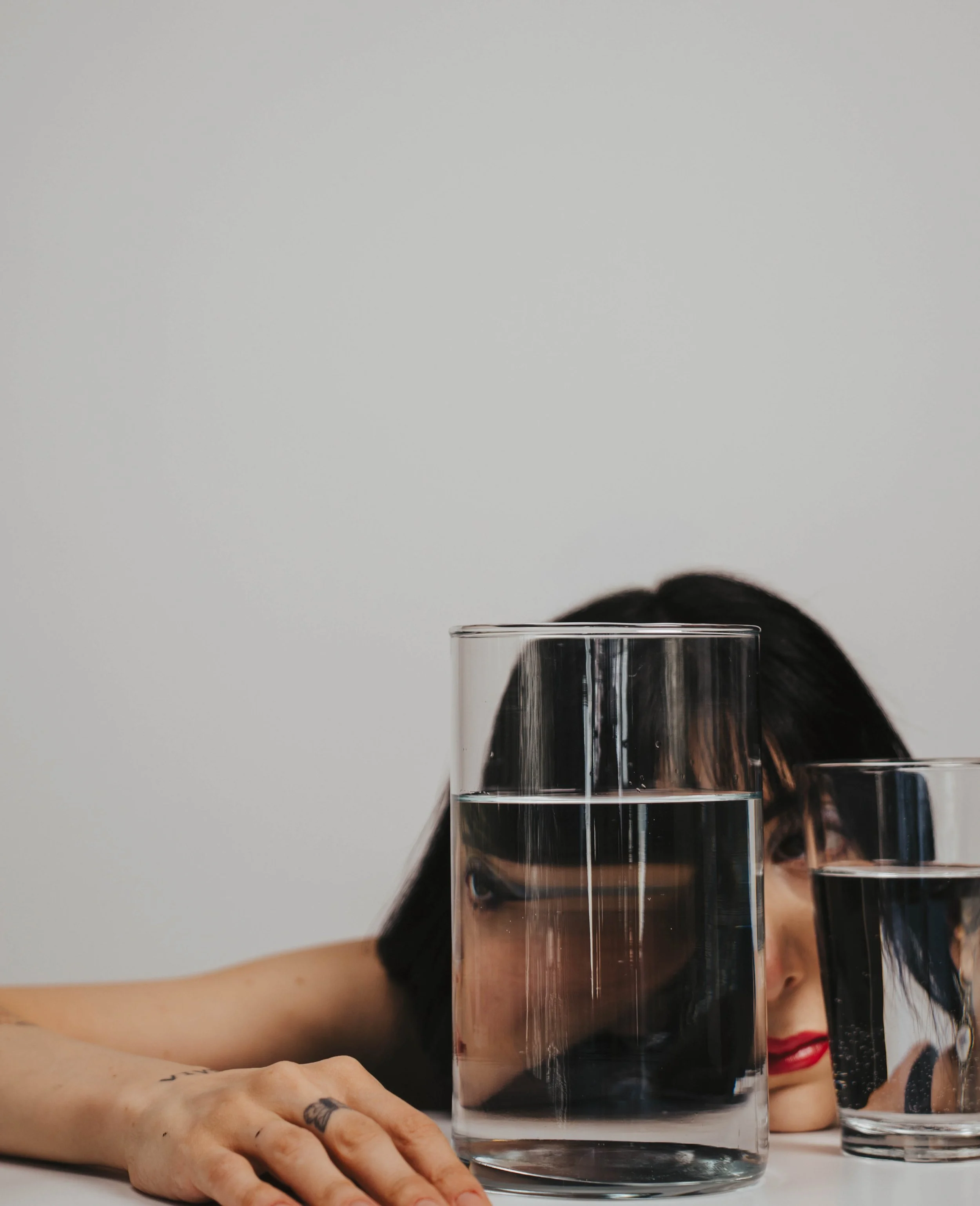
There’s something emotional about photographing yourself after difficult years. You notice every change immediately — in your expression, your posture, your energy. But sometimes through photography, you also rediscover parts of yourself you thought disappeared.
I think this shoot reminded me that they’re still there.
This series is definitely not perfect.
There are things technically I would still improve next time.
But honestly, I’m proud of myself for doing it anyway.
Because sometimes creating again after a difficult period matters more than creating something flawless.
And maybe that’s what returning to self portraits means for me now.
Not perfection.
Not pressure.
Just finding my way back to art again.